The History of Kennedy Blvd. (aka Hudson Boulevard)

Courtesy of the Jersey Journal

Kennedy Boulevard holds a special place in every North Bergenites heart. From Sunday drives up or down the Boulevard or getting stuck at 46th Street behind someone trying to make a left. Every person that called North Bergen home surely has a Kennedy Boulevard memory, some old timers can still be heard referring to it at Hudson Boulevard. Recently the Jersey Journal celebrated its 150th Anniversary and there was a highlight of the top stories the paper covered. One that especially stuck out to me was the article written by Carmela A. Karnoutsos and Patrick Shalhoub, a feature on the opening of Hudson Boulevard.

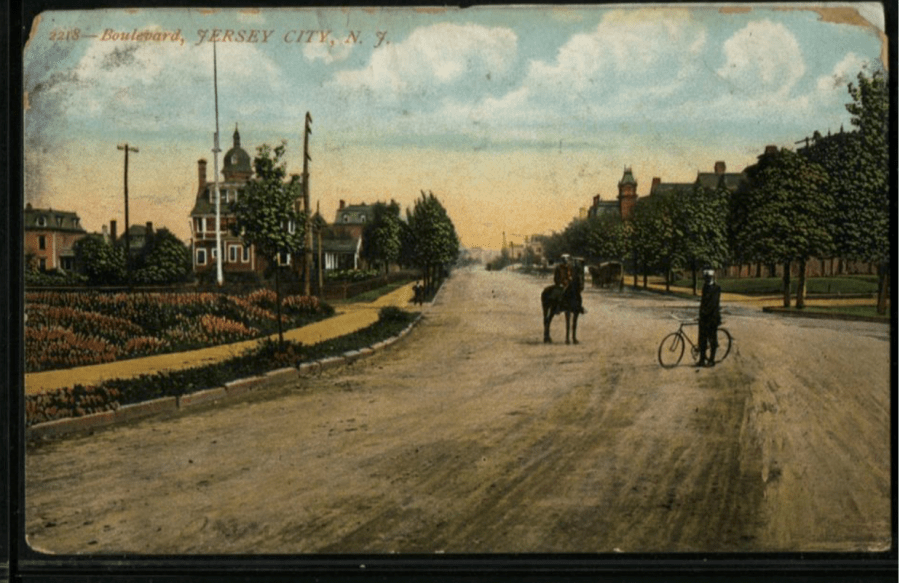
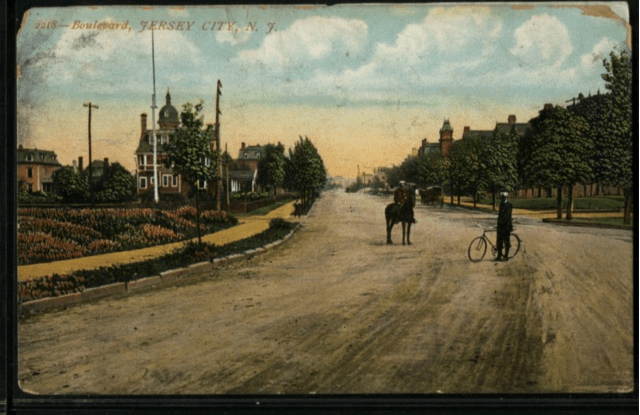
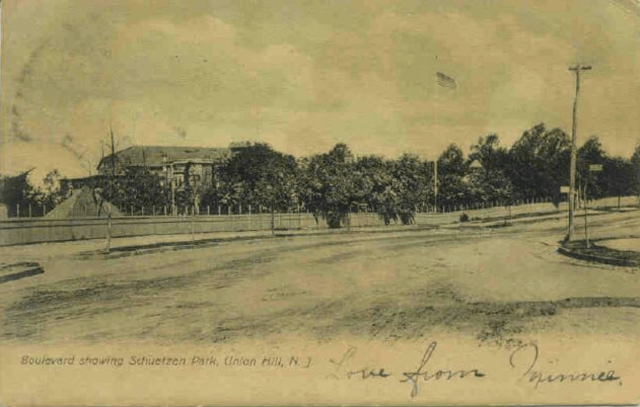
Hudson Boulevard officially opened on Thanksgiving Day of 1895. The roadway itself always existed but in sections. In North Bergen such as there was a time when the road was named Weavertown Road and Dollytown Road, respectively. The completion of the road from the Hudson-Bergen County Line to the tip of Bayonne took roughly 30 years to plan. The roadway itself was meant for pleasure driving, where the twists and turns of the Boulevard assumed a leisurely pace of travel. The Boulevard was also intended for only for pedestrians, bicycles, horseback riding, and horse-drawn carriages. It was completely closed to commercial traffic…if only still. The road opened with ceremony at Scheutzen Park and headed south toward Bayonne.
weehawkenhistory.us

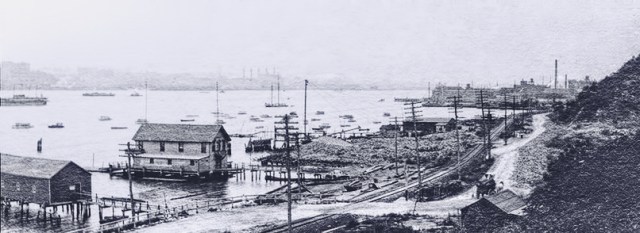
As Karnoutsos and Shalhoub point out in their article only the lower half of North Bergen would see the festivities on November 28th 1895. Riders from the Cilo Wheelmen Bicycle Club would have started at Schuetzen Park in front of a grandstand filled with local town and county officials celebrating the finally constructed roadway. But by searching maps and postcard collections we can piece together what landmarks riders and spectators would have seen and visited on that crispy autumn Thursday.

Heading south the first major landmark would have been Floral Park. Located on New Street (26th St.) the park was an extension of Schuetzen Park just a few blocks up. Floral Park however would be a much quieter park used by families and for weekend outings by local societies as well as police and firefighters. Complete with two dances halls, a pond, ice house and 3 shooting ranges, the park would have hosted an all day event during the opening of the new boulevard. However, after the park there were a few dwellings also a few green houses along the boulevard. The next pit stop that day would be on Highpoint Avenue.
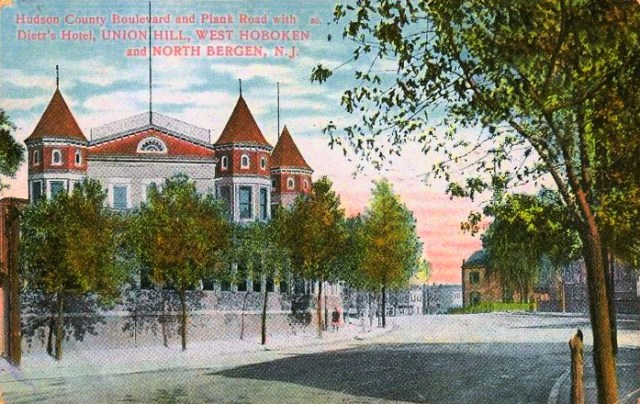
Courtesy of Lenny DiBrango

A short ride further south a lively crowd would have been found at the Dietz Hotel off of Highpoint Avenue (22nd St.) The hotel was owned by one Conrad Dietz, brother of future mayor Charles Dietz (1900-1913). The Dietz hotel proudly sat on Hudson Boulevard as the only hotel south of Schuetzen Park. It hosted visitors from across the nation and was known to a place of lively entertainment on weekend with a somewhat of a rough crowd at times. It is from the hotel and family in which Dietz Place gets its namesake.
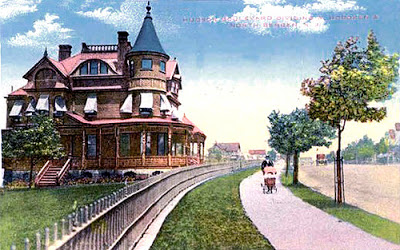
Continuing on the ride through North Bergen would become much quieter and country-esque. After the Dietz Hotel and stretching down to Traphagen Street (14th St.) The Boulevard was home to an expansive greenhouse complex. However, there was one indicator you were still in town, perhaps the grandest home to grace Hudson Boulevard. The home was located between present day 18th and 19th Street. By 1910 the home is listed as “manager’s dwelling” for the greenhouse complex occupying the property. Unfortunately, at the time it is unknown who may have lived in the home at the time impart to how the 1895 State Census was conducted. Instead of addresses being record, the census taker own took a head count. However, there is some great information about the towns make up here, documenting that the town had roughly 1100 homes and 8400 residents.

The celebration would continue through North Bergen onto Bayonne. The last place of interest would have been Savoye & Adelina Streets (12th & 11th St). That block was home to several saloons both on the North Bergen and West Hoboken side of the street. After that riders would cycle down, crossing Paterson Plank Road and eventually Paterson Avenue (Secaucus Road) making there way into Jersey City. 1.5 miles is the total distance covered in North Bergen that day, but it was the first part of the newly created Hudson Boulevard to be used.

Originally posted on The North Bergen Time Machine

Michael Maring is a history buff turned history teacher based out of North Bergen, NJ. He has lived in North Bergen his entire life and enjoys spreading the unique history about our town. His goal with North Bergen Time Machine is to spark interest in the history of North Bergen.
Hidden Treasure Buried in North Bergen

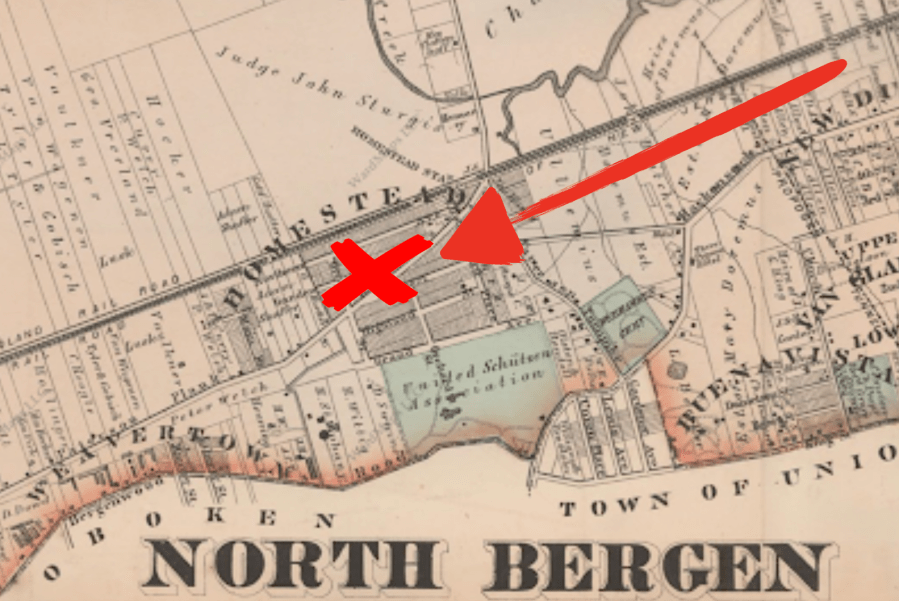
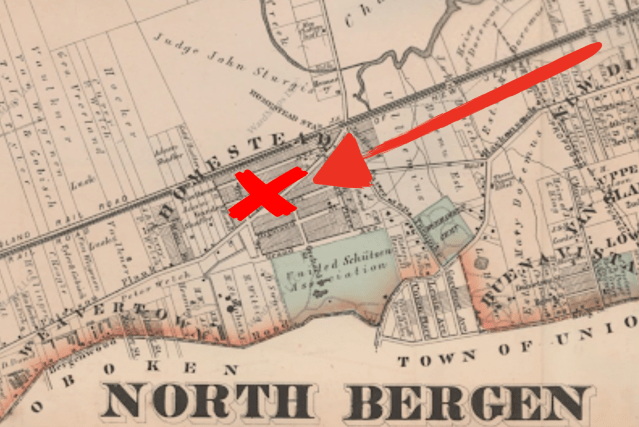
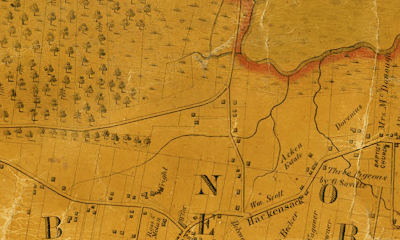
(Map does not represent actual location of treasure.)

Did you ever dream of finding a buried treasure? I’m sure if you did it probably was on a island, perhaps on a white sand Caribbean beach and you’d discovered the ideal pirate treasure chest which overflowed with gold coins, jewels, and gems. Sounds pretty sweet. However, what if you didn’t have to travel that far to make such a find?

North Bergen is known for many things but a forgotten treasure is usually not one of them. As a kid I remember heading into the dark “mushroom” tunnel on Durham Avenue near 70th Street with hopes of finding something old and forgotten. Today we knew those are old brewery tunnels from Rock Cellar Park, which I’d still like to go into and maybe find something lost to time. Nonetheless, there maybe a treasure buried in…well under the town with a value upwards of $750,000 dollars!

The fabled treasure can be found in the former village of Homestead. Homestead was centralized around present day Tonnelle Avenue, today it would be bound to the north by Paterson Plank Road (to Secaucus), the south by the North Bergen:Jersey City border, east by Paterson Plank Road (to Jersey City) and west by Penhorn Creek. Yet back in 1873 we can see in the above map only a small section just west of Schuetzen Park was developed, the rest remained farmland. Of those farms lived a man by the name of Hendrick Dempster. Not much is known about Dempster at this time except for that he passed away in 1873. The only other detail known about Dempster is that near the end of his life, he buried his life savings on his property in Homestead, a savings of $38,000 dollars worth of gold coins!

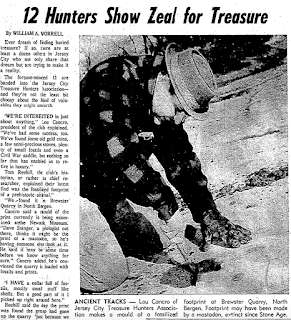
Dempster’s fortune today is worth upwards of $750,000 dollars, but don’t run and get your shovels just yet. The treasure has been sought after since the 1920s, and as of today still remains unfound. There are three times it was believed the treasure was within the grasp of a lucky treasure seeker. The first to pursue the treasure were two young boys in the early 1920s. The two boys were found on the property that once made up Dempster’s farm. The story goes they dug tunnels under the old Dempster farm for 10 days. In those 10 days they discovered a filled in passageway. Before any more explorations could be made they were asked to be removed by the property owner. The location of this tunnel was kept secret, and oddly enough, one thing that is still unknown today is the exact location of Dempster’s farm, that said the search would continue some 30 years later.

In the 1950s a treasure enthusiast named Edward Torski picked up where the two boys left off. Torksi had much better luck in some sense. Torksi struck a cache that seemed extremely promising. Unfortunately for him the cache found turned out not to be that of Dempster’s. Upon examination, documents revealed that the find was related to old auto parts manufacture that was once located along Tonnelle Avenue. The location of the find and name of the company were never made public.

The last time the treasure made news was in 1964. In ’64, The Jersey City Treasure Hunter’s Association claimed to be “close” to finding the treasure. The group was lead by former Jersey City Police patrolman Lou Cancro. Cancro and eleven other members searched the area for all kinds of lost treasure. During the clubs existence they made several finds: gold coins, gems, jewelry and so on. In North Bergen the club found fossilized footprints in Brewster’s Quarry. The club was active in the search for Hendrick Dempster’s treasure. Today there is no way of knowing if the club ever found the cache, but as of February 1964, they felt they were hot on Dempster’s trail.

Today the Homestead Section of North Bergen is unrecognizable from 1964, and completely unlike that of 1923 and even more so foreign from Dempster’s time. The idea that Dempster’s gold is still out there is very intriguing. With every new project that breaks ground in the Homestead neighborhood there exists a chance that Dempster’s treasure may be found. Sadly though, most of the maps from the 1850s, ’60s and ’70s turn up no evidence of Dempster owning any land or where his property was located, leading us to believe perhaps he rented a piece of property. Again, the Federal Census from the 1850s, ’60s & 70s also turn up no evidence of a Hendrick Dempster, or variation of the name. This could be North Bergen’s greatest mystery. A man which evidence of his existence is as lost to history as his treasure. But next time a building is taken down or a new project is about to begin, you may just find me with a metal detector search for Dempster’s Treasure.

Originally posted on The North Bergen Time Machine

Michael Maring is a history buff turned history teacher based out of North Bergen, NJ. He has lived in North Bergen his entire life and enjoys spreading the unique history about our town. His goal with North Bergen Time Machine is to spark interest in the history of North Bergen.
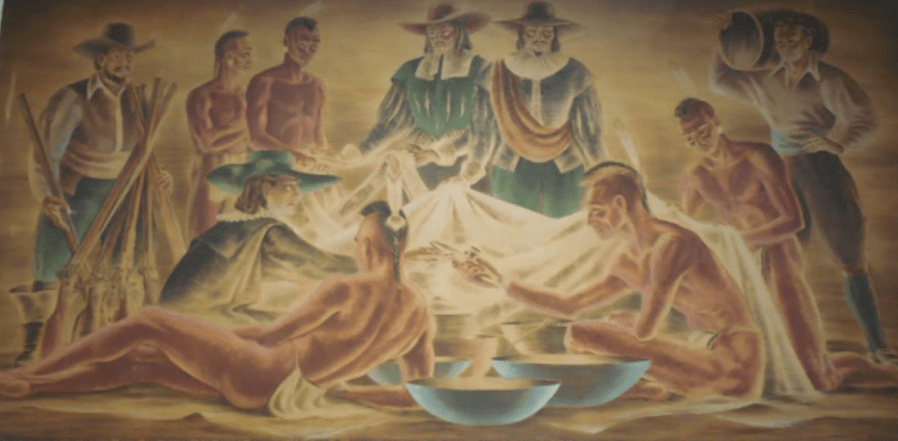
Purchase of Territory of North Bergen from the Indians

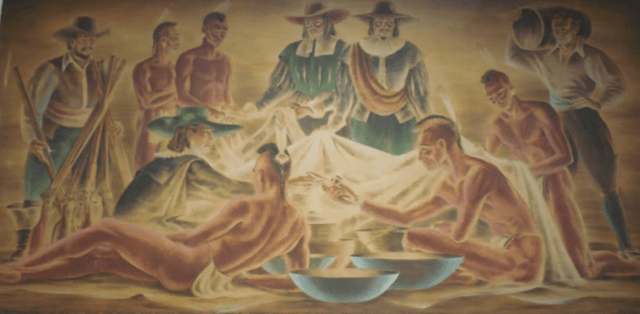
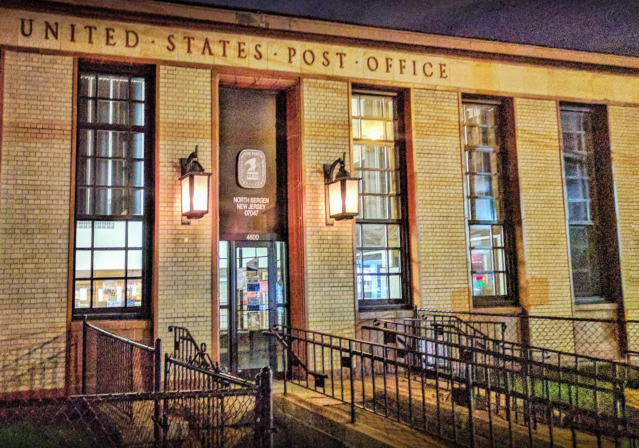
Since 1939 there has been North Bergen landmark sitting at the corner of 46th Street and Tonnelle Avenue. The Post Office at 4600 Tonnelle Avenue has been a lasting reminder of the work done under President Franklin Roosevelt’s New Deal. The building itself was designed by Louis A. Simon, a designer with a “conservative-progressive” approach, with the hopes of displaying “art, beauty, symmetry, harmony and rhythm.” This Post Office was not of revolutionary design nor of technological advancement. What is of interest, however, lies on the inside – a reference to a truly forgotten time in North Bergen history.

What the most remarkable aspect of this Post Office is the artwork crafted by Avery Johnson which still graces the back wall. Johnson a native of Wheaton, Ill was one of many artists tasked by the United States Department of Treasury’s Section of Painting and Sculpture. “The Section,” as it became known, was one of the many ways the government tried to raise employment during the Great Depression, specifically in the art community. Johnson was one of the artists selected with the goal of making art available to all people, one of his finest works would be for the people of North Bergen. However, Johnson was instructed that his work should be of local interest and related to the area. He would deliver a masterpiece which he titled “Purchase of Territory of North Bergen from the Indians.”

“Purchase of Territory of North Bergen from the Indians” was completed in 1942. North Bergenites flocked to the Post Office to see Johnson’s work. The mural has remained in the Post Office and is still in excellent shape for being 76 years old. However, impressive as Johnson’s work is, it leads the historian in me to dig deeper into who these “Indians” were. Who are they? Did they actually live in what would become North Bergen, and if so where? And what legacy have they left behind?

Lenepahoking or what would eventually become New Jersey was once home to the Lenni Lenape people. The Lenape phantry that would have inhabited North Bergen were theAchkinkas-hacky, a name that would be anglicized to what we know today as “Hackensack.” It is estimated by Edwin Burrows and Mike Wallace that the Hackensack had roughly 80 encampments in present day Hudson County prior to European contact. Of those the largest would have been Gamoenapa, the modern day Communipaw neighborhood in Jersey City. Then, Hackensack would number near 1000 people, of which 300 were warriors. The tribe itself was a peaceful tribe, seasonal in its agriculture as well as migration. In the spring and summer the tribe made encampments along the Hudson or as they would have referred to it, the Muh-he-kun-ne-tuk meaning “river that flows two ways.” During the fall and winter months they moved their settlement further off the shore into current day Hackensack and Teaneck area. They would move their main settlement Tantaqua every year to allow the ground to renew itself, today the most likely location for Tantaqua is in Overpeck Park.

What happened to the Hackensack? Where did they go? Why did they go? And what is their legacy today? What happened to the Hackensack is the unfortunate story of all Native American groups. With European arrival there was war and eventually land deals that deeded the land to the Dutch and British. such a deal was made for North Bergen. After Kieft’s War in 1643, natives controlled the area that would become North Bergen. The land was sold on January 30, 1658 along with every territory that now makes up northern Hudson County. What was it sold for?

80 fathoms of wampum, 20 fathoms of cloth, 12 brass kettles, 6 guns, 1 double brass kettle, and half a barrel strong beer.

This is estimated to have been worth roughly $675 dollars by historians in 1917, equalling $14,048.84 today. By 1750 the state of New Jersey would have purchased all the Lenape land in the state for $5,000 dollars, $161,134.75 today.

The the remaining Hackensack and Lenape would leave New Jersey towards the beginning of the 19th century. They dispersed to other states and assimilated with other tribes. But what of their legacy? In North Bergen the Hackensack would leave no trace, or better said, over the last 400 years of development and redevelopment, any and all evidence of native society in North Bergen has been erased. However, there is some lasting remnants of the Hackensack in the Hudson County area. Find listed below some obvious and not so obvious Umani words we use in regards to Hudson County and other familiar areas:

  • gamoenapa/Communipauw – on the other side of the river

  • ack-kinkas-hacky/Hackensack – place of stony ground

  • haassemus/Harimus – crow’s marsh

  • hopoghan hackingh/Hoboken- place of stone for pipes

  • lackawanna/Delaware, Lackawanna and Western Railroad – stream that forks

  • manna-hata/Manhattan – island of many hills

  • pahsaayeek/Passaic – point of rocks

  • sukit-achgook/Snake Hill – black snakes

  • sekakes/Secaucus – snakes

  • wee-awken/Weehawken – at the end

  • parampseapus/Paramus – where there is worthwhile land

For more information on the Native American history of North Bergen and the greater Hudson County area check out these great sources:

The Welikia Project

The official Nanticoke-Lenape website

Winakung: Lenape Village at Waterloo Village

The Ramapough Lenape Nation

Originally posted on The North Bergen Time Machine

Michael Maring is a history buff turned history teacher based out of North Bergen, NJ. He has lived in North Bergen his entire life and enjoys spreading the unique history about our town. His goal with North Bergen Time Machine is to spark interest in the history of North Bergen.
North Bergen's 'Great White Hurricane'

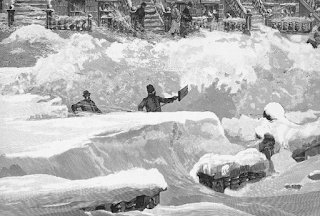
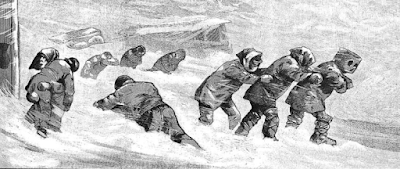
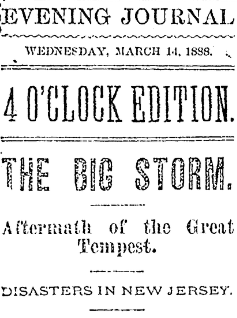
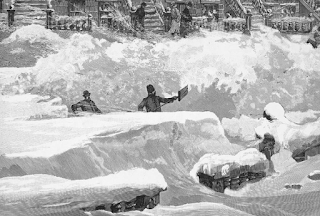
Today’s storm may have caused major inconveniences, but it was nowhere near as devastating as The Great White Hurricane, The Great Blizzard of 1888. The storm that occurred 130 years ago lasted three days, March 11th to the 14th. The storm crippled the northeast enveloping some parts in up to 58 inches of snow!

Unfortunately, at this time, no none photos of North Bergen from the 1888 storm are known to exist. Perhaps so because the town was still sparsely populated with neighborhoods spread across the current town. Neighborhoods with names like Weavertown, Homestead, Buena Vista, (downtown) as well as areas like New Durham, Van Glanhnville, West New York, New Durham and North New Durham, (midtown) additionally areas like Bergen Woods, Woodcliff and Hudson Heights (uptown) all totalling a population of about 5,700 residents. It would be due to this isolation and the veracity of the storm that North Bergen would be entombed in nearly 2 feet of snow, with snow banks towering near 6 feet high.

As the snow fell the North Bergen residents hunkered down. Snow fell heavily and rapidly. The temperature plummeted to 6° F. Winds rattled homes and howelled down roadways, peaking at 80 miles per hour at times. As so much the storm raged for three long days. Reports began to escape the frozen municipality. The descriptions announced were grim. Residents ran out of food during the three day event. To make matters worse they also depleted their supplies of firewood. The town was essentially crippled. The towns committee desperately reached out for assistance, unfortunately all roads in or out of North Bergen were rendered useless by the crushing veil of snow as well as all telegraph lines. One of the major concerns were the railways cutting through town, the main supply line for North Bergen and beyond. There was fear and talk of famine spreading from house to house and town to town as the storm began to dissipate.

When the storm finally ended the dig out began. Across North Bergen locals cleared streets to make way for wagons. The wagons were then loaded with snow and emptied into the meadows areas along present day Westside Avenue. Bull’s Ferry Road was cleared and reopened by the prominent inn keeper, Dan Kelly, and commerce restarted. Councilman Charles Purvell retold his story of heroism and excitement during the blizzard. Purvell claimed his barn was blown, in tack, some 100 feet in the air and finally landed nearly a half mile away at Jacod Wurtz farm. Purvell continued he desperately tried to secure the barn, but mother nature bested him.

Purvell’s wild claim aside the storm was extremely damaging to North Bergen. The farms along Tonnelle Avenue had there beet, potato and squash crops destroyed, spring planting was also delayed due to the storm, again fanning the worries of famine in the county. The once thriving floral industry was also crippled. Greenhouses were crushed under the weight of the snow, or worse destroyed by the gusting winds. Florist claimed to have lost hundred if not thousands of dollars due to the storm. One near death story was of a tree falling and flattening a portion of the Schloffer home forcing the family to brave the storm and seek shelter at their nearest neighbors home. 400 people were killed across the northeast during the course of the storm, one of those casualties was one Mr. John Short of New Durham. Short was caught in the storm walking to work in Union Hill (current day Union City), his body was found on Bergen Turnpike by a farmhand. Those reported missing during the storm were assumed to have perished in the blizzard.

The Great Blizzard of 1888 was the bar for which people used to compare storms. The Blizzard of ’47 was compared to that latter by those who lived through it, the so-called “88er’s”. The 88er’s constantly argued that March’s blizzard was, and always will be the most devastating storm anyone could face. Ultimately some of the lasting effects of The Great White Hurricane can still be felt today. The storm pushed for the use of underground subways, in fact the creation of the New York City subway is directly related to this storm. From there after, telegraph lines were laid underground, similarly today phones and internet lines are positioned underground. Locally, we can see the lasting memory of the ’88 storm based on how well our hills are cleared at the sight of the first snowflake. The Blizzard of 1888 certainly has been eclipsed by more modern storms, but imaging the fear and shock of such a storm and being completely blindsided by it. The 88er’s have been long gone but with the 130th anniversary of the storm coming quickly, I feel for them after going through this week’s Nor’easter.

Originally posted on The North Bergen Time Machine

Michael Maring is a history buff turned history teacher based out of North Bergen, NJ. He has lived in North Bergen his entire life and enjoys spreading the unique history about our town. His goal with North Bergen Time Machine is to spark interest in the history of North Bergen.
1956: Airplane crashes into the WOR tower in North Bergen

For most of it’s modern history, North Bergen has been a relatively quiet town. However, It is hard to say we are a sleepy, little town as we reside in the shadow of New York City. On November 8th, 1956, North Bergen was the site of an unimaginable catastrophe. An episode so surreal to the residents of town it is still discussed amongst some of the older residents as the worst juncture in the town’s history.

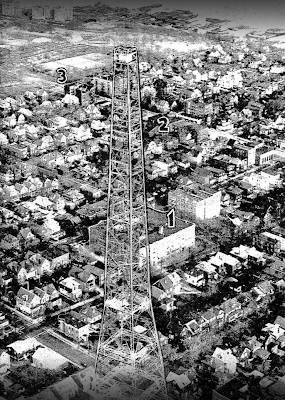
In the age of digital and streaming services it is hard for most North Bergen residents to picture a 760 foot tall (roughly 80 stories), 420 ton steel tower in the middle of town. However, such was the reality upon the towers completion in the summer of 1949. The tower was built to serve WOR TV or better known today at MY 9. The company and it’s partners purchased 30 lots bound by 72nd and 73rd Streets & Palisade and Bergenline Avenue. The property was purchased for $30,000, today estimated to be roughly $315,000. WOR TV choose North Bergen for it’s site as it needed its transmission tower to be higher than the buildings of New York. The WOR Tower would serve as a link for the broadcasting company transmitting signals from New York City to Washington D.C. and vice versa. For nearly seven years the WOR Tower’s bright red letters illuminated the skies over North Bergen, a symbol of the United States’ technological progression in a post World War II world and for some time it stood as one of the largest man made structures in the world. But that would all change on a cloudy November afternoon in 1956.

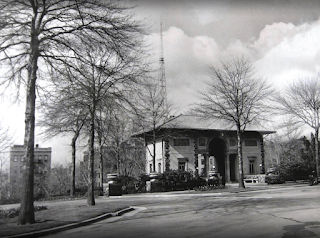
The WOR Tower as seen from Riverview Drive inside James J. Braddock North Hudson County Park
Courtesy of Lenny DiBrango

At 12:51 pm on November 8th 1956 a watchman at the WOR Tower heard a booming sound and upon inspection found no damage to the tower itself. Unbeknownst to him was the tragedy unfolding only a few blocks away. The watchman had no idea a twin engine plane clipped it’s left wing on the tower and crashed into an apartment house at 7805 Broadway. The pilot of the plane, William L. Cromley of Trafalgar, Indiana, became lost in the heavy overcast and showers that sat over North Bergen that day. Eyewitnesses reported that upon hitting the tower the plane spun out of control and spread debris across a several block area before crashing. Later reports found the Cromley was trying to reach North Hudson County Park for an emergency landing.

Needless to say the Woodcliff Section of North Bergen was thrust into chaos seconds after the plane struck the WOR Tower. The first responding official to the crash site was Hudson County Park Patrolman George Peterson. Peterson rushed into the crash site and made his way up to the 5th floor. There he rescued Samuel Phelps, whose apartment was directly struck by the crippled aircraft. Sadly however, Peterson could not reach Phelps’ wife Harriet. Mrs. Phelps had jumped from her fifth floor window as the flames engulfed the apartment. Mrs. Etelle Pyne would also lose her life in the accident as the plane crashed into her fifth floor apartment as well. Stories Like Peterson, John Creutz, a Guttenberg ambulance driver ran into the building upon arrival. There he was able to rescue a wheelchair-bound resident. The first member of the North Bergen Police Department to arrive was Patrolmen James Sottarelli and Bernard Gaffney. Sottarelli gave this recount during an interview with the Jersey Journal,

“First I saw the landing gear on the street, then through the smoke I saw a gaping hole in the building and I knew what had happened.”

Other residents in the building immediately moved to assist those in their building. Mrs. Eula Laus, Mrs. Laura Stamm and Mrs. Esther Fernhoff ran throughout the building banging on doors and ushered residents out of the burning building. Mrs. Fernhoff had to be physically removed by police as she refused to leave until everyone was out of the building.

That November day was perhaps the longest day in North Bergen History. As resuces were underway, firefighters worked to stop the fuel feed fire from engulfing the entire building. Firefighters from across Northern Hudson County responded to the call for assitance. Those injured were Henry Hagerman, John Sinkinson and Michael Ziegler of North Bergen, Michael Ference of Guttenberg and Paul Nowatnick of West New York. Boulevard Patrolman William O’Niell was also hospitalized. During his recovery he stated, “Those firemen deserve a lot of credit,” he continued to state the scene was unlike anything he had seen before with “debris two to three feet deep.” The scene of the crash was just that and from photos that can be seenhere the sight was that of something from a war zone. The smell of burning fuel mixed with the charred remains from the pilot and his passenger, Russel S. Williams Sr of Indianapolis, were strewn through out the area. However, amongst the smoldering building and wreckage that lay throughout the neighborhood a new worry began to overcome those in the area.

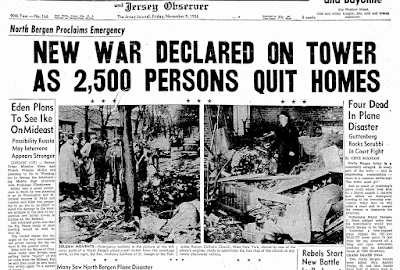
An unnerving idea began to flush the mind of town officials and residents of the area around the tower. The idea that at any moment the tower may give way and come crashing down on the quiet residential street of the Woodcliff Section of town. Mayor Angelo Sarubbi ordered the area be evacuated. Some 2,500 residents were forced from their homes. The homes between the streets of 71st & 75th Street and from Bergenline Avenue to Broadway were evacuated. Gene Scanlon of the Jersey Journal describe the vacated neighborhood as a “ghost town.” Mayor Herman Klien of Guttenberg also called for evacuations, removing several hundred Guttenberg residents from the North Bergen-Guttenberg boarder. North Bergen police stood guard along a perimeter to stop anyone from entering the area, however buses would slow and onlookers would gather to view the crippled tower. What prompted this was a 10 foot long piece of steel flew three blocks upon initial impact damaging the home of Michael Grebelja who lived on 75th Street between Hudson and Palisade Avenues.

Deconstruction of the tower began within a few days of the accident. Mayor Sarubbi had set a two week deadline on November 12th for the completion of the work. During this time the family of the pilot wrote a letter to the North Bergen Police Department.

“I hope the people of North Bergen will not hold it against my brother-in-law for what happened. He, too, was a well-liked man and if he could have avoided it, he would have. With all the hurt that was caused, we still are awfully sorry, and we are hurt, too.”

The outcome of that tragic day is something North Bergen residents should know of. The what if and could haves are the stuff of nightmares considering November 8, 1956 fell on a Friday. A day in which students would have been at both Robert Fulton School and at the Immaculate Heart of Mary. It is a miracle only two residents were lost that day, yet still ill-fated. The scares of that fateful day can still be seen on the facade of 7805 Broadway. An unsuspicious two toned brick work that to most people would be unnoticeable and some might not even give a second look. But now 62 years later, a plane crash on a Friday November afternoon is and will always be a part of our collective town history.

*Originally posted on The North Bergen Time Machine

Michael Maring is a history buff turned history teacher based out of North Bergen, NJ. He has lived in North Bergen his entire life and enjoys spreading the unique history about our town. His goal with North Bergen Time Machine is to spark interest in the history of North Bergen.
Haunted North Bergen

Halloween, a time for costumes, Trick or Treat, jack-o-lanterns and if you’re a teacher like me maybe some toilet paper on your house. This time of year is often filled with ghost stories and local legend, this article will be no different. This write up will take a look at some known and unknown ghastly events experienced across town. But be forewarned, as you read this, you may want to keep a light or two on.

The oldest and often least known haunting tale in North Bergen finds its origins along Old River Road. Today, home to the popular Porto, Old River Road is a road traveled mostly by those who live or dine there. Yet, what most people do not know is for the last 200 years or so there have been sightings of an apparition of a person from a time long gone. Reports form over the last two centuries pop up ever so often of people claiming to see what appears to be a Native American quietly pacing up Old River Road. It also claims those that tried to follow would lose sight of the Ack-kinkas-hacky (Hackensack Native) as he’d vanish into thin air or disappear amongst the night mist that rolls in off the Hudson.

The next hot spot of supernatural activity is the area between 76th and 77th Street on Boulevard East, or more morbidly referred to as “Suicide Bridge.” The area was given that macabre nickname due to the unnervingly high amount of suicides that took place there during the 1920s and 30s. Going there today you find runners in stride and visitors looking for that perfect shot of New York City, but unbeknownst to them is the supernatural spectors that are known to appear. Much like the Native of Old River Road, people have claimed to see someone standing near the now fenced off bridge one minute, then gone the next.

The infamous Guttenberg Racetrack which once covered the area from 81st to 91st and across from Bergenline to Kennedy Boulevard can claim several haunts in the present day Racetrack Section of North Bergen. It would be considered a bit unnerving to hear the click and clack of horse steps in your home, but such is the case for some homes along 4th & 5th Avenue near 82nd St, as the stables for the “Gut” once stood there. Could it be an otherworldly animal still looking to roam free, or perhaps a lone jockey looking for one last race. Another spector that has been reported is that of a small child killed near Bergenline Avenue during the days when early airplanes would use the area as an airport. Finally, it is not uncommon to be walking along 91st, especially where Little Coney Island was once located, and hear someone call from the shadows or fell a tug on your jacket in the crisp autumn night. Who could this presence be? A former patron of either the racetrack or park itself, or even a that of a down on his luck spirit seeking a handout of sorts.

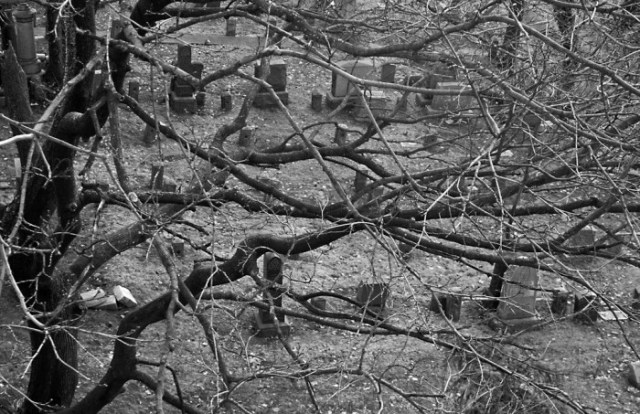
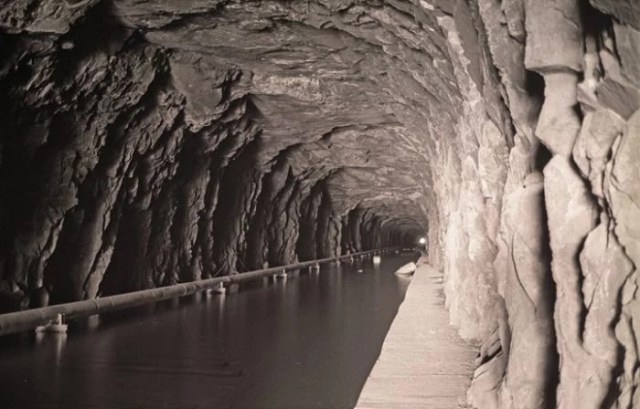
The most well known haunt in North Bergen, hands down has to be the notorious Devil’s Tunnel. The tunnel itself is nothing more than an abandoned line on the old Susquehanna railway. However, the fact that it runs directly under Fairview Cemetery is a folklorist dream come true. The tunnel is home to a number of stirring tales. The most prominent is that the tunnel is a site used by Devil worshipers during full moons to practice the dark arts. Another is the passage is home to the Hounds of Hell, that will chase you either through it or worse. Finally, and likely the most disturbing, because it could become possibly true at some time, is that the tunnel has caved in under the cemetery leaving caskets and even corpses visible to those brave enough to enter. But beware, even if there is something lurking in the shadows the entrance to the tunnel is on private property so stay out.

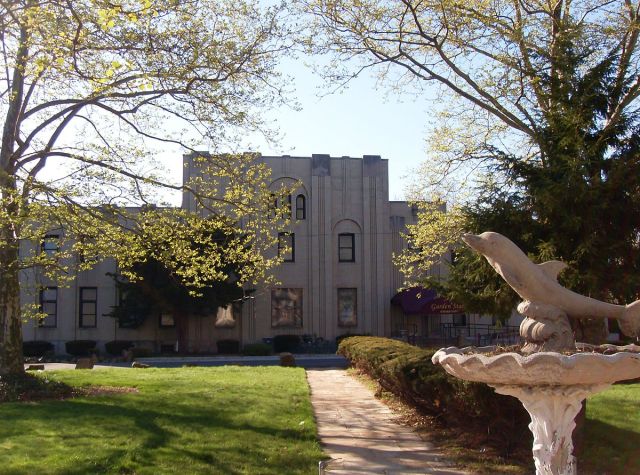
The last stop on the haunted history tour of North Bergen has nothing to do with anyone interned at the Garden State Crematory, but has everything to do with a former employee. Prior to being converted into a crematory, this building was once home to Louis Becker and dubbed Becker’s Castle. Becker was a wealthy business man so it might make sense for him to still be hanging around keeping an eye on his former residence. However, some say it is actually the ghost of Becker’s housekeeper, Mrs. Catherine Kling. It is rumored that after Kitty’s passing strange happenings began occurring around the newly retrofit building. It was reported that on occasion paperwork let disorganized at the end of a busy day would seem to be left in neat piles the following morning. The sounds of soft footsteps were also known to be heard walking through rooms that were now divided by walls niched for urns. The scent of a light perfume would often be detected in the area that once was Catherine’s quarters. It might be fair to say that even though the Becker family is long gone, Kling still feels a duty to maintain the home for their return.

These are just a few of the eerie and chilling tales that can be found right here in North Bergen. A town not really known for it haunts but home to plenty of them. I really hope you enjoyed reading and hopefully learning about some of the local lore. But remember, sometimes it is not simply your mind playing tricks on you, and there could just be something going bump in the night because sometimes, the things you see in the shadows are more than just shadows.

Happy Halloween.

Originally posted on The North Bergen Time Machine

Michael Maring is a history buff turned history teacher based out of North Bergen, NJ. He has lived in North Bergen his entire life and enjoys spreading the unique history about our town. His goal with North Bergen Time Machine is to spark interest in the history of North Bergen.
North Bergen in the Rebellion

“War, at the best, is terrible, and this war of ours, in its magnitude and in its duration, is one of the most terrible.”-Abraham Lincoln

The American Civil War is still a topic of much interest amongst Americans. When the Civil War is discussed, New Jersey is rarely mentioned, North Bergen is surely never mentioned. Nevertheless, when at the outbreak of the Civil War men from North Bergen answered the call to defend the Union. Sixteen men volunteered to serve this great country during its darkest time to date. The men that served came from all backgrounds. They were farmers, quarrymen, longshormen and even a grocer would be the men to be mustered from North Bergen. Some of those were born in North Bergen while others immigrated and migrated to the town due to its location and high employemnet opportunities. All said, sixteen men would leave to fight the war down in Dixie, one would become a deserter and three would make the ultimate sacrifice for their nation.

On April 12th, 1861 Confederate forces bombard the Union held Fort Sumter in Charleston Bay. Wold spread throughout the nation that the Civil War had begun. Almost immediatly men from across the land volunteered to serve each side. North Bergen’s men would be called on just the same. The township itself issued to following statement to drum up men to serve in the summer of 1861:

“Inhabitants of North Bergen: The War Committee of the township are deputed, to say a few words to you upon the present crisis in the country’s affairs. But a brief time ago and our town had no organization for operation in this work; in doing our part with other townships and you are earnestly invited to deliberate upon ‘ways and means’ at a public meeting to be held at the Old School House in New Durham, October 15th, at 7 1/2 o’clock P. M. Fellow Citizens! A formidable Rebellion is in the land; tbe institutions under which wo hare so pleasantly prospered are in peril. A just constitution is in jeopardy. The ship of State is menaced by a mutinous crew. Our President, with those in authority, should at no time seek succor or aid in vain. Loyalty to the Union must stay the hand of Treason, and put down an unreasonable effort too usurp the authority of the Government. Traitors have taken our Forts and other public property, closed the ear to the voice of patriotic duty, quelled the spirit of fealty to the Federal authority and set up a polity of their own, arraying themselves in a defiant and hostile attitude toward the general Government,”In efforts to retake the public property, so stealthily seized, you observe the most rancorous and rigorous resistance; in endeavors to put the laws in force the Union authorities receive rebellious and belligerent buffets; calls to these recreant and ruthless sons of the Republic to return to their allegiance are unheeded. The mild influences of the Moral law avail not. The sound reasonings of the good old ‘common law’ restrains no rebel. The stern force of Military rule can be alone effectual against treason. ‘An appeal to arms and the God of hosts’ has been all that was left us. Those whom we once delighted to honor and were please to call us ‘brethren’ are now our foes. A sufficient force to make the laws respected is required. Demands upon patriotism are here, as money, ‘the sinews of war’ and men mighty in battle. To withhold that which you have as a power in war, is to give ‘aid and comfort to the enemy.’ By your Military talent you exhibit how heroic and resolute you can be in deeds of fortitude, when leaping forth to the rescue; already our stalwart and valient youth strengthen the arm of the Government in rebuking the seditious and subduing the foe that would dishonor our flag. A CITIZEN CAN HOLD NO INTEREST FROM HIS COUNTRY’S. Are you, fellow citizens, generous to the Government that has hitherto nurtured you? Have you an earnest devotion for the general good? Can it be that any among you would show ‘the white feather?’ Will we hear your safe decision when the many are in council? Will you be prompt and ready in all emergencies? While amid the clash of conflict, brave sons are as steel against sedition, will not your means and your zeal and your energies be at the service of the Republic? Let us hope that our township will be liberal to the levies upon its loyalty, and that its patriotism in this crisis will never be questioned.”

Transcribed from William Shaw’s A History of Essex and Hudson County

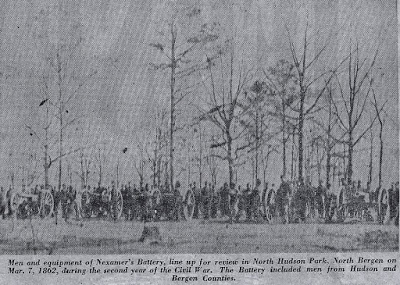
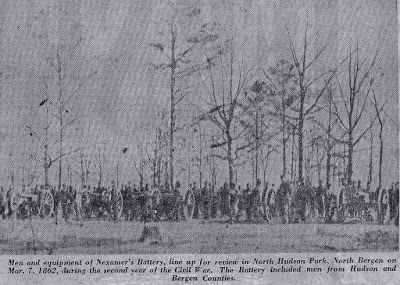
Sixteen men from North Bergen would volunteer to serve in the Union forces. The men ended up in severl battalions, the New Jersey Volunteer 1st, 11th, 21st Regiments and Battery A of the 1st New Jersey Light Artillery. These units fought throughout the south and at some of the most pivotal battles of the war. Of the men who served 3 would die during the war. Two of them, Joseph Greenleaf & John Snyder both died of typhiod fever at Union camps in Virgina during August of 1862. Garret Earle would fall at the Battle of Salem Church, in Salem Heights, Virginia on May 4th, 1863. Finally the last person to not make it home would be Edward Danielson. Danielson did not die in battle, or succum to wounds or diesese, but deserted. Danielson was last seen during the war at a camp near White Oak Church, Fredericksburg, Virginia in June of 1863. He is currently listed a deserter in the New Jersey 1st’s records.

Listed below are the names of those from North Bergen who volunteered, served and returned home:

  • Robert Barnard

  • James Borash

  • John Burton

  • James Caulfield

  • Henry Chasmer

  • John Chasmer

  • Christopher Englebrecht

  • Jacob Garmen

  • Martin Hamblin

  • Alexander McCausland

  • George Pahl

  • John J. Richardson

After four long bloody years of war, the American Civil War would come to an end on May 13th 1865. With the war over men returned home. The men that returned to North Bergen returned to a heroes welcome. They returned to their communities and restarted their daily lives. They would become pillars of their communites and be revered by locals for the remainder of their lives. The Civil War veterans would also leave their impact on the town naming on of the first public schools in town after their beloved general, Ulysses S. Grant. Although long gone from the towns memory, North Bergen’s veterans of the Civil War ought to be memorialized as they felt it their duty to leave their homes behind and defend the freedoms of all Americans.

Originally posted on The North Bergen Time Machine

Michael Maring is a history buff turned history teacher based out of North Bergen, NJ. He has lived in North Bergen his entire life and enjoys spreading the unique history about our town. His goal with North Bergen Time Machine is to spark interest in the history of North Bergen.
James J. Braddock's first fight

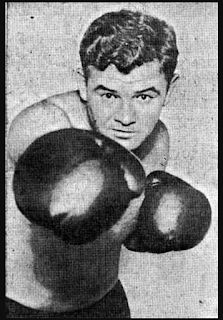
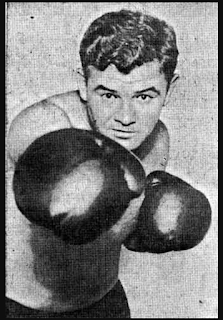
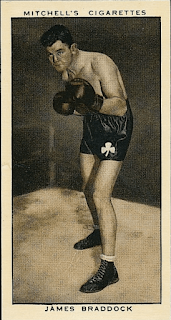
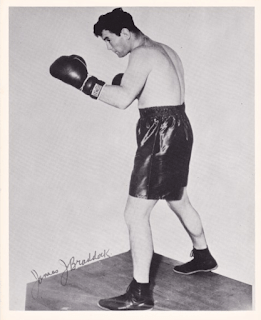
James J. Braddock is North Bergen’s most famous athlete of all time. The, so called, Bulldog of Bergen had a mythical boxing career. The Cinderella Man is best known for his epic title run starting in 1934 and culminating in the greatest upset in boxing history when Braddock defeated Max Baer at the Madison Square Garden Bowl in 1935. This fight catapulted Braddock into world wide fame and would forever etch him into North Bergen’s history. This is the Braddock we have all heard of, the legendary Jimmy Braddock but how did he get there?

Just examine any one of Braddock’s professional fights. With a record of 51-26-7 we can see that Braddock was a true boxer, a bruiser who’d stand toe-to-toe, ready to go the distance. However, a boxer’s first fight often sets to tempo for the rest of their career. This article will examine just that, Braddock’s professional first fight. That first fight would take place on Tuesday, April 13th 1926 at Union City’s Amsterdam Hall.

Leading up to that fateful Spring night, Braddock had made a name for himself as the primer boxer in the state of New Jersey. Throughout his amateur career Braddock showed the three abilities a boxer needs to achieve greatness in the ring; he could punch, he had heart and most importantly, he could take a punch. This was proven in every fight Braddock competed in as an amateur, especially in his final bout against Frank Zavita. On that crisp Tuesday night the world would change for Braddock as he set his “in-ring” career in motion to become a champ.

Amsterdam Hall in Union City was over capacity that night. The small setting overflowed out of the front doors onto Summit Avenue, 1500 people came to see Braddock make his professional debut. The man in the opposite corner was one Al Settle, a very capable fighter out of Harlem. The bout itself was an undercard match, but overshadowed the two main event matches. It was a 6 round contest and a taste of the pros for young Braddock.

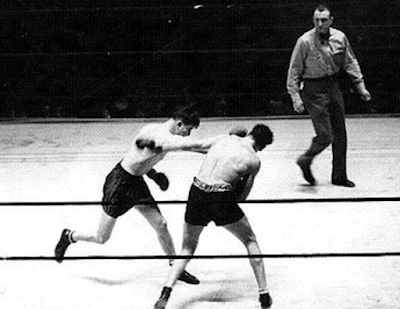
Braddock came out to a thunderous applause. As the bell rang he appeared to be in control with a strong showing. However, Settle had another idea. During the third round, Settle and Braddock exchanged a flurry of punches. Both pugilists stood toe-to-toe, swapping lefts and rights. Luckily for the former welder, the fight was called in the fourth. Writers who were present that evening said that the fight “had gone the distance.” Settle would have come out on top but instead, a draw was awarded.

A draw was not enough to stop Braddock’s campaign towards greatness. He’d go on to win his next 13 fights, ten of which by way of knockouts. During this time he would face Settle again. On December 12th, at the Walker Athletic Club in New York City, Braddock would come out on victorious, going the distance and winning by a unanimous decision. Braddock would hang up the gloves in 1938 after defeating Tommy Farr in Madison Square Garden. The name Braddock was always one that evoked a sense of pride in the boxer around North Bergen and it seems that it always will.

Originally posted on The North Bergen Time Machine

Michael Maring is a history buff turned history teacher based out of North Bergen, NJ. He has lived in North Bergen his entire life and enjoys spreading the unique history about our town. His goal with North Bergen Time Machine is to spark interest in the history of North Bergen.
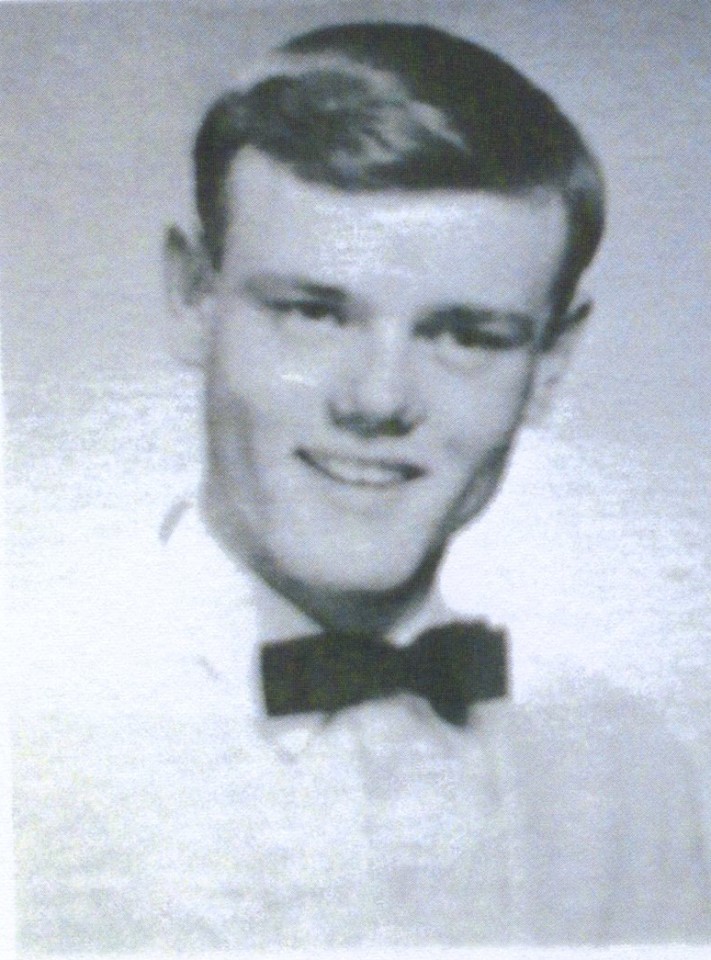
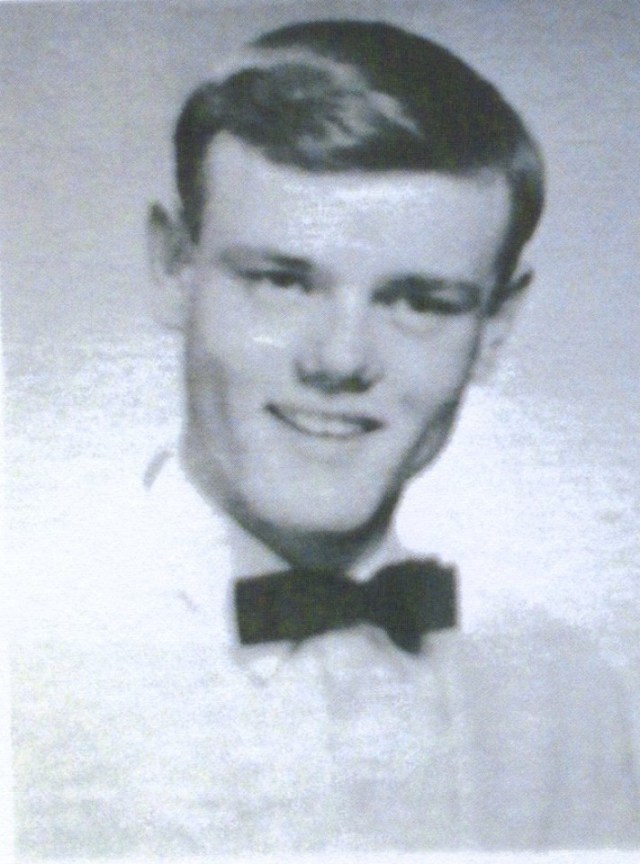
North Bergen Remembers CPL Robert Samuel Allen

CPL Robert Samuel Allen

Second Indochina War, Vietnam

Robert Samuel Allen was born on August 14, 1947. His home of record is North Bergen, NJ. He had one sister, Linda and two brothers, George and David (both Army veterans).

He graduated from high school in 1966 and played right field for the baseball team. He was known as quite a good athlete. Allen entered the United States Army and attained the rank of Corporal (CPL). He served with the 1st Battalion (Mechanized) 50th Infantry, 173rd Airborne Brigade. There is a Little League Field on 76th Street, West of JFK Boulevard in North Bergen named in his honor.

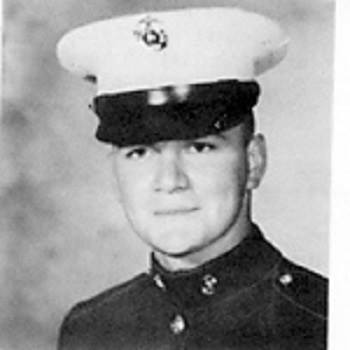
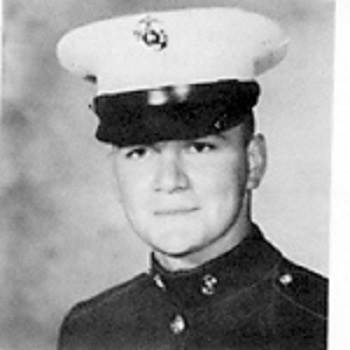
North Bergen Remembers CPL Michael J. Brellenthin

CPL Michael J. Brellenthin

Second Indochina War, Vietnam

Michael J. Brellenthin was born on December 21, 1947. His home of record is North Bergen, NJ. His parents, Clara and Ed, had five children, three daughters and two sons. Michael graduated from North Bergen High School in 1965. Some of his hobbies included fishing, hunting and baseball. He was a talented artist and planned on becoming an architect. He entered the US Marine Corps in May 1967, attaining the rank of Corporal (CPL) and was sent to Vietnam.

On February 25, 1968, after his patrol was ambushed, Brellenthin was reported missing in action while following a patrol near Khe Sahn. he left behind a wife, Ruth, whom he had married two weeks prior to leaving for Vietnam.

Six months later, Michael was one of nine men reclassified as “killed in action” but only four caskets were sent home for interment. Five remain unaccounted for.

There is some controversy regarding his status. The government declared him killed in action, but his family and others believe he is still missing in action.

Brellenthin was buried on September 10, 1968 in the Jefferson Barracks Memorial Cemetery in St. Louis, MO. Besides his wife Ruth, he left behind his parents and four siblings, Edward, Ellen, Diane and Barbara Milazzo.

Five years later, one of the “buried” men was released by the Vietnamese as a prisoner of war. In August 1978, ten years after incident, the Department of Navy wrote, “there was a chance that Michael did survive.” From then until now, the government has added nothing.