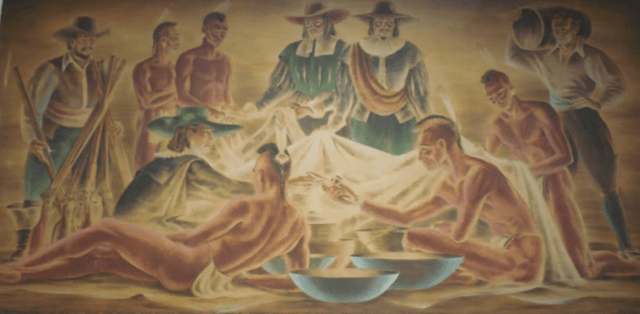
Purchase of Territory of North Bergen from the Indians

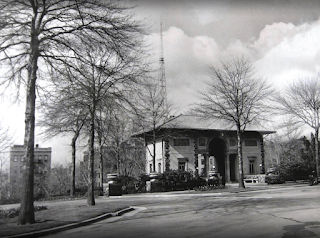
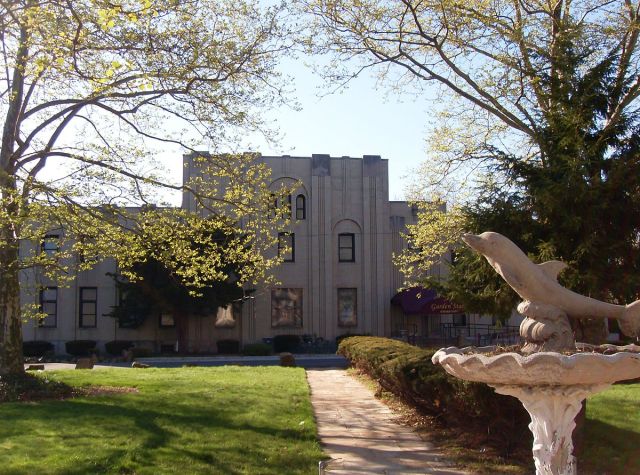
Since 1939 there has been North Bergen landmark sitting at the corner of 46th Street and Tonnelle Avenue. The Post Office at 4600 Tonnelle Avenue has been a lasting reminder of the work done under President Franklin Roosevelt’s New Deal. The building itself was designed by Louis A. Simon, a designer with a “conservative-progressive” approach, with the hopes of displaying “art, beauty, symmetry, harmony and rhythm.” This Post Office was not of revolutionary design nor of technological advancement. What is of interest, however, lies on the inside – a reference to a truly forgotten time in North Bergen history.
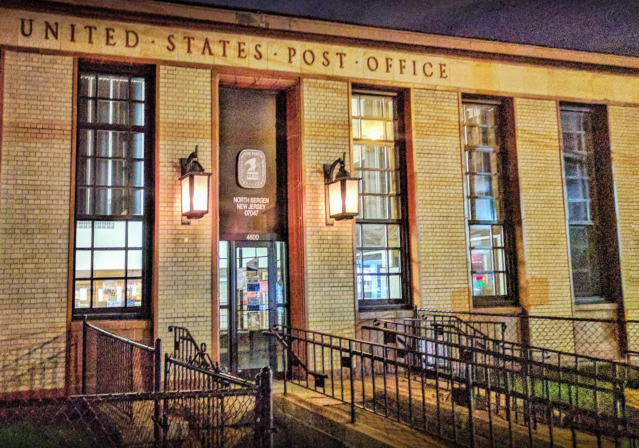
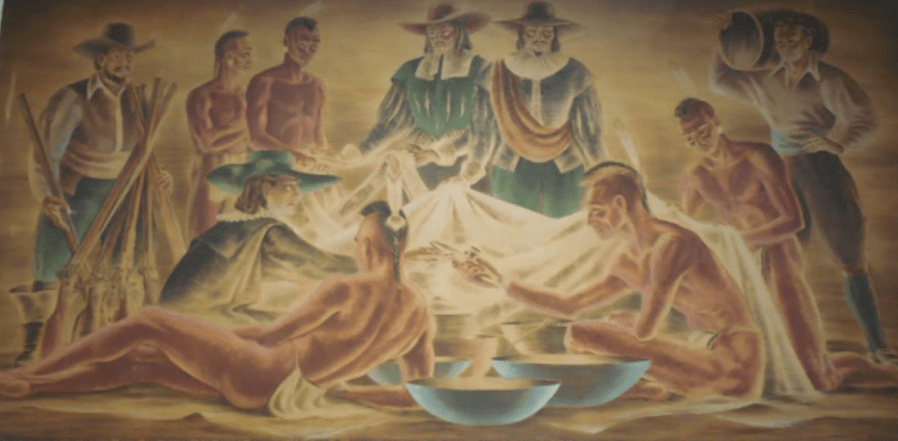
What the most remarkable aspect of this Post Office is the artwork crafted by Avery Johnson which still graces the back wall. Johnson a native of Wheaton, Ill was one of many artists tasked by the United States Department of Treasury’s Section of Painting and Sculpture. “The Section,” as it became known, was one of the many ways the government tried to raise employment during the Great Depression, specifically in the art community. Johnson was one of the artists selected with the goal of making art available to all people, one of his finest works would be for the people of North Bergen. However, Johnson was instructed that his work should be of local interest and related to the area. He would deliver a masterpiece which he titled “Purchase of Territory of North Bergen from the Indians.”

“Purchase of Territory of North Bergen from the Indians” was completed in 1942. North Bergenites flocked to the Post Office to see Johnson’s work. The mural has remained in the Post Office and is still in excellent shape for being 76 years old. However, impressive as Johnson’s work is, it leads the historian in me to dig deeper into who these “Indians” were. Who are they? Did they actually live in what would become North Bergen, and if so where? And what legacy have they left behind?
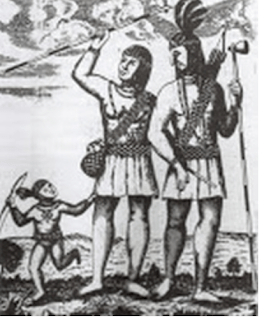
Lenepahoking or what would eventually become New Jersey was once home to the Lenni Lenape people. The Lenape phantry that would have inhabited North Bergen were theAchkinkas-hacky, a name that would be anglicized to what we know today as “Hackensack.” It is estimated by Edwin Burrows and Mike Wallace that the Hackensack had roughly 80 encampments in present day Hudson County prior to European contact. Of those the largest would have been Gamoenapa, the modern day Communipaw neighborhood in Jersey City. Then, Hackensack would number near 1000 people, of which 300 were warriors. The tribe itself was a peaceful tribe, seasonal in its agriculture as well as migration. In the spring and summer the tribe made encampments along the Hudson or as they would have referred to it, the Muh-he-kun-ne-tuk meaning “river that flows two ways.” During the fall and winter months they moved their settlement further off the shore into current day Hackensack and Teaneck area. They would move their main settlement Tantaqua every year to allow the ground to renew itself, today the most likely location for Tantaqua is in Overpeck Park.

What happened to the Hackensack? Where did they go? Why did they go? And what is their legacy today? What happened to the Hackensack is the unfortunate story of all Native American groups. With European arrival there was war and eventually land deals that deeded the land to the Dutch and British. such a deal was made for North Bergen. After Kieft’s War in 1643, natives controlled the area that would become North Bergen. The land was sold on January 30, 1658 along with every territory that now makes up northern Hudson County. What was it sold for?

80 fathoms of wampum, 20 fathoms of cloth, 12 brass kettles, 6 guns, 1 double brass kettle, and half a barrel strong beer.

This is estimated to have been worth roughly $675 dollars by historians in 1917, equalling $14,048.84 today. By 1750 the state of New Jersey would have purchased all the Lenape land in the state for $5,000 dollars, $161,134.75 today.

The the remaining Hackensack and Lenape would leave New Jersey towards the beginning of the 19th century. They dispersed to other states and assimilated with other tribes. But what of their legacy? In North Bergen the Hackensack would leave no trace, or better said, over the last 400 years of development and redevelopment, any and all evidence of native society in North Bergen has been erased. However, there is some lasting remnants of the Hackensack in the Hudson County area. Find listed below some obvious and not so obvious Umani words we use in regards to Hudson County and other familiar areas:

  • gamoenapa/Communipauw – on the other side of the river

  • ack-kinkas-hacky/Hackensack – place of stony ground

  • haassemus/Harimus – crow’s marsh

  • hopoghan hackingh/Hoboken- place of stone for pipes

  • lackawanna/Delaware, Lackawanna and Western Railroad – stream that forks

  • manna-hata/Manhattan – island of many hills

  • pahsaayeek/Passaic – point of rocks

  • sukit-achgook/Snake Hill – black snakes

  • sekakes/Secaucus – snakes

  • wee-awken/Weehawken – at the end

  • parampseapus/Paramus – where there is worthwhile land

For more information on the Native American history of North Bergen and the greater Hudson County area check out these great sources:

The Welikia Project

The official Nanticoke-Lenape website

Winakung: Lenape Village at Waterloo Village

The Ramapough Lenape Nation

Originally posted on The North Bergen Time Machine

Michael Maring is a history buff turned history teacher based out of North Bergen, NJ. He has lived in North Bergen his entire life and enjoys spreading the unique history about our town. His goal with North Bergen Time Machine is to spark interest in the history of North Bergen.
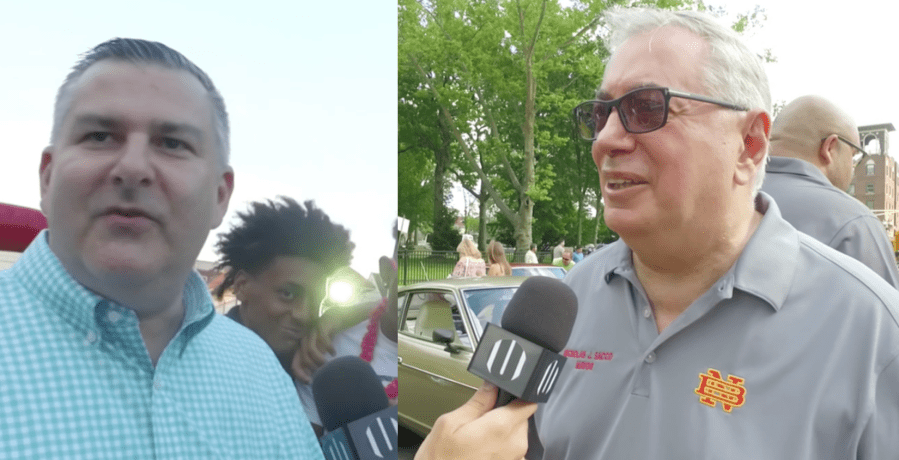
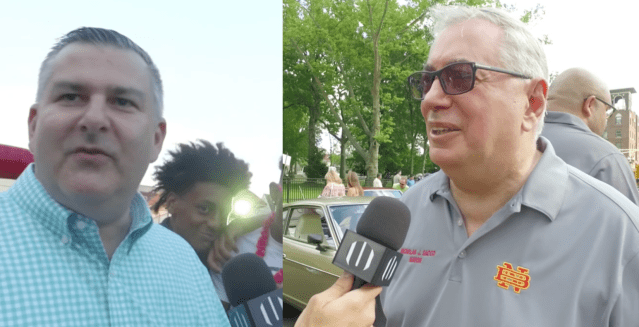
Fake News? Sacco camp slams NBC, claims Wainstein collusion

Another day, another NBC report slamming North Bergen Mayor Nicholas Sacco.

“The accusations that make up the foundation of this story are the same political accusations being made by the Sacco Administration’s political opponent, Larry Wainstein,” said town spokesman Phil Swibinski.

According to the NBC report, insiders claim nepotism – even corruption – are problems inside the North Bergen Board of Education. They report that Sacco, who for years also served as a leading school administrator, has ten relatives working for the education system. NBC also claims town employees are forced to attend fundraisers and donate to political campaigns.

“It is possible the mayor’s relatives and friends are superbly well qualified for these jobs. And it is also possible they are not, and that they are there for another reason,” said former U.S. Attorney Chuck Rosenberg who is also and NBC News legal analyst. “There is a pattern here that I think cries out for investigation.”

Swibinski fired back by stating “the allegations of relatives working for North Bergen and other related entities are grossly exaggerated.”

“As with any political entity, fire department, police department, or any private employer for that matter, if the work is stable and the career path is a good one, family members are often likely to follow their mothers, fathers, brothers, sisters, aunts and uncles into the same career paths. North Bergen is no different.”

As for the allegations of forcing municipal employees to attend fundraisers, Swibinski pushed back and claimed, “neither Mayor Sacco, nor anyone in his administration, force anyone to engage in political activity of any kind.”

“People, including employees, become involved and support the administration because of its great accomplishments – stable taxes over multiple decades, fiscal restraint leading to four bond rating increases over the last 10 years saving taxpayers hundreds of thousands of dollars, a police department that is nationally recognized for both its professionalism and diversity, new parks, new and renovated schools, safe neighborhoods and decreasing crime.”

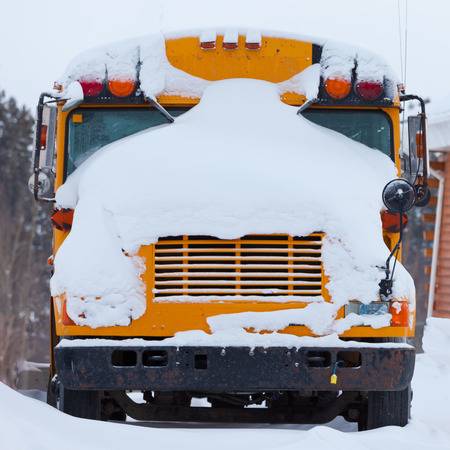
Delayed Opening for North Bergen Schools Due to Snow

Delayed opening means all elementary schools will open at 10:00 A.M. Kindergarten through eighth grade students will report to their home room class at 10:00 A.M. Their lunch time will be according to their regular schedule.

Elementary students will be dismissed at 3:00 P. M.

High School students with a first period will start class at 10:00 A.M. Students who start after first period will start with third period at 10:35 A.M. There will be no periods 2nd and 9th period classes and all students will be dismissed according to their regular schedule.

Pre-Kindergarten

A.M. classes will be canceled.

P.M. classes will begin at 12:30 P.M. and end at 3:00 P. M.

Gifted and Talented Special Programs

All A.M. Gifted and Talented Special Programs will be canceled on a delayed opening day. (Accelerated Math, PEAK, etc.)

All P.M. Gifted and Talented Programs will follow the regular schedule.

BUS SCHEDULE FOR DELAYED OPENING

The bus schedule for our bus students will be as follows:

High School Students on the Kennedy Boulevard route will be picked up starting at 9:20 A.M. for all Period 1 students. All other students will be picked up at 10:00am.

Elementary Students – buses will pick up students one hour later than the regular time schedule. In other words, if your child takes the bus at 8:15 A.M. regularly, on a delayed opening day your child will take the bus at 9:15 A.M.

Please be on time for the buses. If your child is late for the designated pick up you will be responsible to bring your child to school.

North Bergen's 'Great White Hurricane'

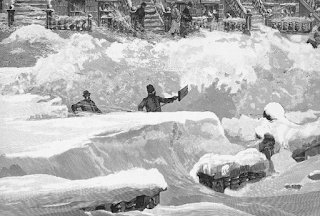
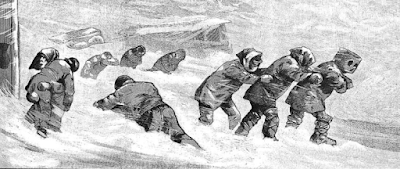
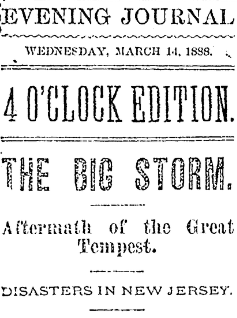
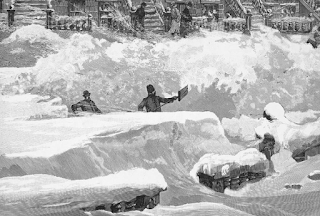
Today’s storm may have caused major inconveniences, but it was nowhere near as devastating as The Great White Hurricane, The Great Blizzard of 1888. The storm that occurred 130 years ago lasted three days, March 11th to the 14th. The storm crippled the northeast enveloping some parts in up to 58 inches of snow!

Unfortunately, at this time, no none photos of North Bergen from the 1888 storm are known to exist. Perhaps so because the town was still sparsely populated with neighborhoods spread across the current town. Neighborhoods with names like Weavertown, Homestead, Buena Vista, (downtown) as well as areas like New Durham, Van Glanhnville, West New York, New Durham and North New Durham, (midtown) additionally areas like Bergen Woods, Woodcliff and Hudson Heights (uptown) all totalling a population of about 5,700 residents. It would be due to this isolation and the veracity of the storm that North Bergen would be entombed in nearly 2 feet of snow, with snow banks towering near 6 feet high.

As the snow fell the North Bergen residents hunkered down. Snow fell heavily and rapidly. The temperature plummeted to 6° F. Winds rattled homes and howelled down roadways, peaking at 80 miles per hour at times. As so much the storm raged for three long days. Reports began to escape the frozen municipality. The descriptions announced were grim. Residents ran out of food during the three day event. To make matters worse they also depleted their supplies of firewood. The town was essentially crippled. The towns committee desperately reached out for assistance, unfortunately all roads in or out of North Bergen were rendered useless by the crushing veil of snow as well as all telegraph lines. One of the major concerns were the railways cutting through town, the main supply line for North Bergen and beyond. There was fear and talk of famine spreading from house to house and town to town as the storm began to dissipate.

When the storm finally ended the dig out began. Across North Bergen locals cleared streets to make way for wagons. The wagons were then loaded with snow and emptied into the meadows areas along present day Westside Avenue. Bull’s Ferry Road was cleared and reopened by the prominent inn keeper, Dan Kelly, and commerce restarted. Councilman Charles Purvell retold his story of heroism and excitement during the blizzard. Purvell claimed his barn was blown, in tack, some 100 feet in the air and finally landed nearly a half mile away at Jacod Wurtz farm. Purvell continued he desperately tried to secure the barn, but mother nature bested him.

Purvell’s wild claim aside the storm was extremely damaging to North Bergen. The farms along Tonnelle Avenue had there beet, potato and squash crops destroyed, spring planting was also delayed due to the storm, again fanning the worries of famine in the county. The once thriving floral industry was also crippled. Greenhouses were crushed under the weight of the snow, or worse destroyed by the gusting winds. Florist claimed to have lost hundred if not thousands of dollars due to the storm. One near death story was of a tree falling and flattening a portion of the Schloffer home forcing the family to brave the storm and seek shelter at their nearest neighbors home. 400 people were killed across the northeast during the course of the storm, one of those casualties was one Mr. John Short of New Durham. Short was caught in the storm walking to work in Union Hill (current day Union City), his body was found on Bergen Turnpike by a farmhand. Those reported missing during the storm were assumed to have perished in the blizzard.

The Great Blizzard of 1888 was the bar for which people used to compare storms. The Blizzard of ’47 was compared to that latter by those who lived through it, the so-called “88er’s”. The 88er’s constantly argued that March’s blizzard was, and always will be the most devastating storm anyone could face. Ultimately some of the lasting effects of The Great White Hurricane can still be felt today. The storm pushed for the use of underground subways, in fact the creation of the New York City subway is directly related to this storm. From there after, telegraph lines were laid underground, similarly today phones and internet lines are positioned underground. Locally, we can see the lasting memory of the ’88 storm based on how well our hills are cleared at the sight of the first snowflake. The Blizzard of 1888 certainly has been eclipsed by more modern storms, but imaging the fear and shock of such a storm and being completely blindsided by it. The 88er’s have been long gone but with the 130th anniversary of the storm coming quickly, I feel for them after going through this week’s Nor’easter.

Originally posted on The North Bergen Time Machine

Michael Maring is a history buff turned history teacher based out of North Bergen, NJ. He has lived in North Bergen his entire life and enjoys spreading the unique history about our town. His goal with North Bergen Time Machine is to spark interest in the history of North Bergen.
1956: Airplane crashes into the WOR tower in North Bergen

For most of it’s modern history, North Bergen has been a relatively quiet town. However, It is hard to say we are a sleepy, little town as we reside in the shadow of New York City. On November 8th, 1956, North Bergen was the site of an unimaginable catastrophe. An episode so surreal to the residents of town it is still discussed amongst some of the older residents as the worst juncture in the town’s history.

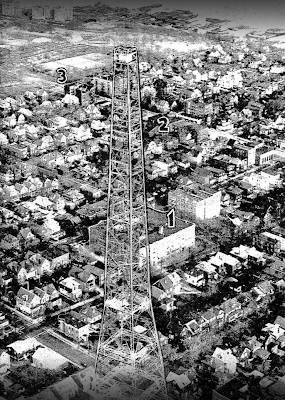
In the age of digital and streaming services it is hard for most North Bergen residents to picture a 760 foot tall (roughly 80 stories), 420 ton steel tower in the middle of town. However, such was the reality upon the towers completion in the summer of 1949. The tower was built to serve WOR TV or better known today at MY 9. The company and it’s partners purchased 30 lots bound by 72nd and 73rd Streets & Palisade and Bergenline Avenue. The property was purchased for $30,000, today estimated to be roughly $315,000. WOR TV choose North Bergen for it’s site as it needed its transmission tower to be higher than the buildings of New York. The WOR Tower would serve as a link for the broadcasting company transmitting signals from New York City to Washington D.C. and vice versa. For nearly seven years the WOR Tower’s bright red letters illuminated the skies over North Bergen, a symbol of the United States’ technological progression in a post World War II world and for some time it stood as one of the largest man made structures in the world. But that would all change on a cloudy November afternoon in 1956.

The WOR Tower as seen from Riverview Drive inside James J. Braddock North Hudson County Park
Courtesy of Lenny DiBrango

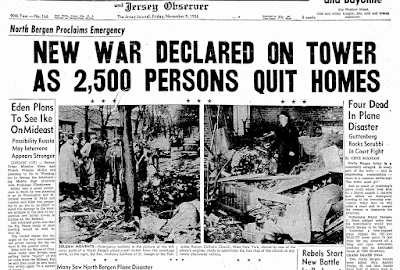
At 12:51 pm on November 8th 1956 a watchman at the WOR Tower heard a booming sound and upon inspection found no damage to the tower itself. Unbeknownst to him was the tragedy unfolding only a few blocks away. The watchman had no idea a twin engine plane clipped it’s left wing on the tower and crashed into an apartment house at 7805 Broadway. The pilot of the plane, William L. Cromley of Trafalgar, Indiana, became lost in the heavy overcast and showers that sat over North Bergen that day. Eyewitnesses reported that upon hitting the tower the plane spun out of control and spread debris across a several block area before crashing. Later reports found the Cromley was trying to reach North Hudson County Park for an emergency landing.

Needless to say the Woodcliff Section of North Bergen was thrust into chaos seconds after the plane struck the WOR Tower. The first responding official to the crash site was Hudson County Park Patrolman George Peterson. Peterson rushed into the crash site and made his way up to the 5th floor. There he rescued Samuel Phelps, whose apartment was directly struck by the crippled aircraft. Sadly however, Peterson could not reach Phelps’ wife Harriet. Mrs. Phelps had jumped from her fifth floor window as the flames engulfed the apartment. Mrs. Etelle Pyne would also lose her life in the accident as the plane crashed into her fifth floor apartment as well. Stories Like Peterson, John Creutz, a Guttenberg ambulance driver ran into the building upon arrival. There he was able to rescue a wheelchair-bound resident. The first member of the North Bergen Police Department to arrive was Patrolmen James Sottarelli and Bernard Gaffney. Sottarelli gave this recount during an interview with the Jersey Journal,

“First I saw the landing gear on the street, then through the smoke I saw a gaping hole in the building and I knew what had happened.”

Other residents in the building immediately moved to assist those in their building. Mrs. Eula Laus, Mrs. Laura Stamm and Mrs. Esther Fernhoff ran throughout the building banging on doors and ushered residents out of the burning building. Mrs. Fernhoff had to be physically removed by police as she refused to leave until everyone was out of the building.

That November day was perhaps the longest day in North Bergen History. As resuces were underway, firefighters worked to stop the fuel feed fire from engulfing the entire building. Firefighters from across Northern Hudson County responded to the call for assitance. Those injured were Henry Hagerman, John Sinkinson and Michael Ziegler of North Bergen, Michael Ference of Guttenberg and Paul Nowatnick of West New York. Boulevard Patrolman William O’Niell was also hospitalized. During his recovery he stated, “Those firemen deserve a lot of credit,” he continued to state the scene was unlike anything he had seen before with “debris two to three feet deep.” The scene of the crash was just that and from photos that can be seenhere the sight was that of something from a war zone. The smell of burning fuel mixed with the charred remains from the pilot and his passenger, Russel S. Williams Sr of Indianapolis, were strewn through out the area. However, amongst the smoldering building and wreckage that lay throughout the neighborhood a new worry began to overcome those in the area.

An unnerving idea began to flush the mind of town officials and residents of the area around the tower. The idea that at any moment the tower may give way and come crashing down on the quiet residential street of the Woodcliff Section of town. Mayor Angelo Sarubbi ordered the area be evacuated. Some 2,500 residents were forced from their homes. The homes between the streets of 71st & 75th Street and from Bergenline Avenue to Broadway were evacuated. Gene Scanlon of the Jersey Journal describe the vacated neighborhood as a “ghost town.” Mayor Herman Klien of Guttenberg also called for evacuations, removing several hundred Guttenberg residents from the North Bergen-Guttenberg boarder. North Bergen police stood guard along a perimeter to stop anyone from entering the area, however buses would slow and onlookers would gather to view the crippled tower. What prompted this was a 10 foot long piece of steel flew three blocks upon initial impact damaging the home of Michael Grebelja who lived on 75th Street between Hudson and Palisade Avenues.

Deconstruction of the tower began within a few days of the accident. Mayor Sarubbi had set a two week deadline on November 12th for the completion of the work. During this time the family of the pilot wrote a letter to the North Bergen Police Department.

“I hope the people of North Bergen will not hold it against my brother-in-law for what happened. He, too, was a well-liked man and if he could have avoided it, he would have. With all the hurt that was caused, we still are awfully sorry, and we are hurt, too.”

The outcome of that tragic day is something North Bergen residents should know of. The what if and could haves are the stuff of nightmares considering November 8, 1956 fell on a Friday. A day in which students would have been at both Robert Fulton School and at the Immaculate Heart of Mary. It is a miracle only two residents were lost that day, yet still ill-fated. The scares of that fateful day can still be seen on the facade of 7805 Broadway. An unsuspicious two toned brick work that to most people would be unnoticeable and some might not even give a second look. But now 62 years later, a plane crash on a Friday November afternoon is and will always be a part of our collective town history.

*Originally posted on The North Bergen Time Machine

Michael Maring is a history buff turned history teacher based out of North Bergen, NJ. He has lived in North Bergen his entire life and enjoys spreading the unique history about our town. His goal with North Bergen Time Machine is to spark interest in the history of North Bergen.
Lowe’s donates services and materials to build $10K storeroom for NB C.A.R.E.S.

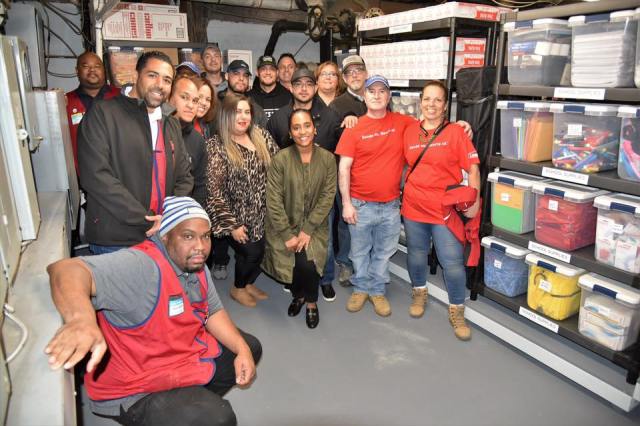
Mayor Nicholas Sacco met with representatives from Lowe’s Home Improvement on Friday, Oct. 26, 2018 to personally thank them for building a storeroom for NB C.A.R.E.S. inside of town hall.

NB C.A.R.E.S. (Community Assistance Relief Events & Support) is an expansion of North Bergen’s Emergency Relief Program, which was created in response to a tragic fire in 2013. Over the years the program branched out into other avenues to help North Bergen residents in need. The program offers meals to the needy during the holiday season. NB C.A.R.E.S. works closely with the administrators of each school in town as well as school nurses and guidance counselors to make sure families are informed of the supplies and services we can provide to them and their children.

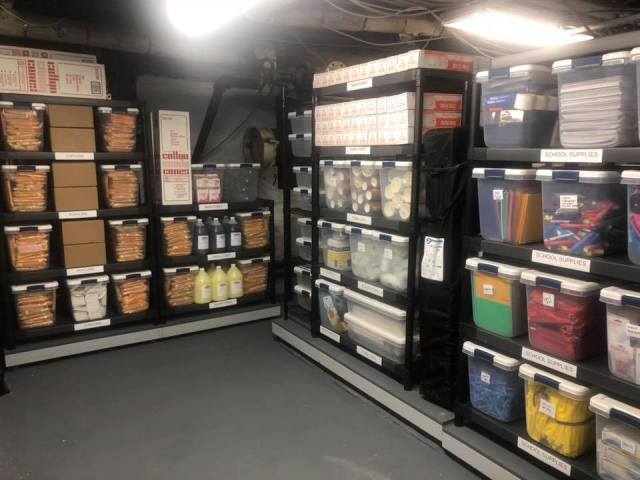
Working with an old boiler room, Lowe’s employees gutted and renovated the space, installing shelves, fixing concrete, leveling floors, painting, and more. All materials and labor were contributed at no cost to the township. The new space provides NB C.A.R.E.S. with a new facility in which to store supplies for its many programs and emergency relief efforts on behalf of North Bergen residents.

The project was part of the Lowe’s Heroes Project, with both the North Bergen and Jersey City stores generously contributing to the makeover, at an estimated total cost of $10,000.

The mission of Lowe’s Heroes Project is to transform lives one community at a time. The volunteer program began in Lowe’s more than 10 years ago. The program encourages employees in a location to team together, adopt a volunteer project with a local nonprofit organization or K–12 public school and make a difference.

Haunted North Bergen

Halloween, a time for costumes, Trick or Treat, jack-o-lanterns and if you’re a teacher like me maybe some toilet paper on your house. This time of year is often filled with ghost stories and local legend, this article will be no different. This write up will take a look at some known and unknown ghastly events experienced across town. But be forewarned, as you read this, you may want to keep a light or two on.

The oldest and often least known haunting tale in North Bergen finds its origins along Old River Road. Today, home to the popular Porto, Old River Road is a road traveled mostly by those who live or dine there. Yet, what most people do not know is for the last 200 years or so there have been sightings of an apparition of a person from a time long gone. Reports form over the last two centuries pop up ever so often of people claiming to see what appears to be a Native American quietly pacing up Old River Road. It also claims those that tried to follow would lose sight of the Ack-kinkas-hacky (Hackensack Native) as he’d vanish into thin air or disappear amongst the night mist that rolls in off the Hudson.

The next hot spot of supernatural activity is the area between 76th and 77th Street on Boulevard East, or more morbidly referred to as “Suicide Bridge.” The area was given that macabre nickname due to the unnervingly high amount of suicides that took place there during the 1920s and 30s. Going there today you find runners in stride and visitors looking for that perfect shot of New York City, but unbeknownst to them is the supernatural spectors that are known to appear. Much like the Native of Old River Road, people have claimed to see someone standing near the now fenced off bridge one minute, then gone the next.

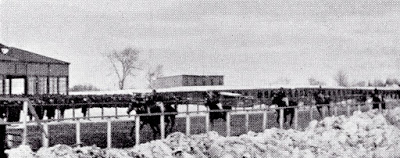
The infamous Guttenberg Racetrack which once covered the area from 81st to 91st and across from Bergenline to Kennedy Boulevard can claim several haunts in the present day Racetrack Section of North Bergen. It would be considered a bit unnerving to hear the click and clack of horse steps in your home, but such is the case for some homes along 4th & 5th Avenue near 82nd St, as the stables for the “Gut” once stood there. Could it be an otherworldly animal still looking to roam free, or perhaps a lone jockey looking for one last race. Another spector that has been reported is that of a small child killed near Bergenline Avenue during the days when early airplanes would use the area as an airport. Finally, it is not uncommon to be walking along 91st, especially where Little Coney Island was once located, and hear someone call from the shadows or fell a tug on your jacket in the crisp autumn night. Who could this presence be? A former patron of either the racetrack or park itself, or even a that of a down on his luck spirit seeking a handout of sorts.
The most well known haunt in North Bergen, hands down has to be the notorious Devil’s Tunnel. The tunnel itself is nothing more than an abandoned line on the old Susquehanna railway. However, the fact that it runs directly under Fairview Cemetery is a folklorist dream come true. The tunnel is home to a number of stirring tales. The most prominent is that the tunnel is a site used by Devil worshipers during full moons to practice the dark arts. Another is the passage is home to the Hounds of Hell, that will chase you either through it or worse. Finally, and likely the most disturbing, because it could become possibly true at some time, is that the tunnel has caved in under the cemetery leaving caskets and even corpses visible to those brave enough to enter. But beware, even if there is something lurking in the shadows the entrance to the tunnel is on private property so stay out.

The last stop on the haunted history tour of North Bergen has nothing to do with anyone interned at the Garden State Crematory, but has everything to do with a former employee. Prior to being converted into a crematory, this building was once home to Louis Becker and dubbed Becker’s Castle. Becker was a wealthy business man so it might make sense for him to still be hanging around keeping an eye on his former residence. However, some say it is actually the ghost of Becker’s housekeeper, Mrs. Catherine Kling. It is rumored that after Kitty’s passing strange happenings began occurring around the newly retrofit building. It was reported that on occasion paperwork let disorganized at the end of a busy day would seem to be left in neat piles the following morning. The sounds of soft footsteps were also known to be heard walking through rooms that were now divided by walls niched for urns. The scent of a light perfume would often be detected in the area that once was Catherine’s quarters. It might be fair to say that even though the Becker family is long gone, Kling still feels a duty to maintain the home for their return.

These are just a few of the eerie and chilling tales that can be found right here in North Bergen. A town not really known for it haunts but home to plenty of them. I really hope you enjoyed reading and hopefully learning about some of the local lore. But remember, sometimes it is not simply your mind playing tricks on you, and there could just be something going bump in the night because sometimes, the things you see in the shadows are more than just shadows.

Happy Halloween.

Originally posted on The North Bergen Time Machine

Michael Maring is a history buff turned history teacher based out of North Bergen, NJ. He has lived in North Bergen his entire life and enjoys spreading the unique history about our town. His goal with North Bergen Time Machine is to spark interest in the history of North Bergen.